Friday, December 4, 2009

The Scholastic Stylus: Nintendo DS in the Classroom

I was observing a committee on special education (CSE) meeting the other day, waiting for a parent to show up – turns out she thought the meeting was scheduled for 20 minutes later than it was – and the school psychologist blurted out something in passing that, unbeknownst to her, stole my focus for the rest of the meeting.

A few weeks before, she had been called to testify in a court case regarding one of the children in the district. The psychologist arrived at court at 9 a.m., but wasn’t called to testify until 4 p.m.

“Good thing I had my Nintendo,” she said.

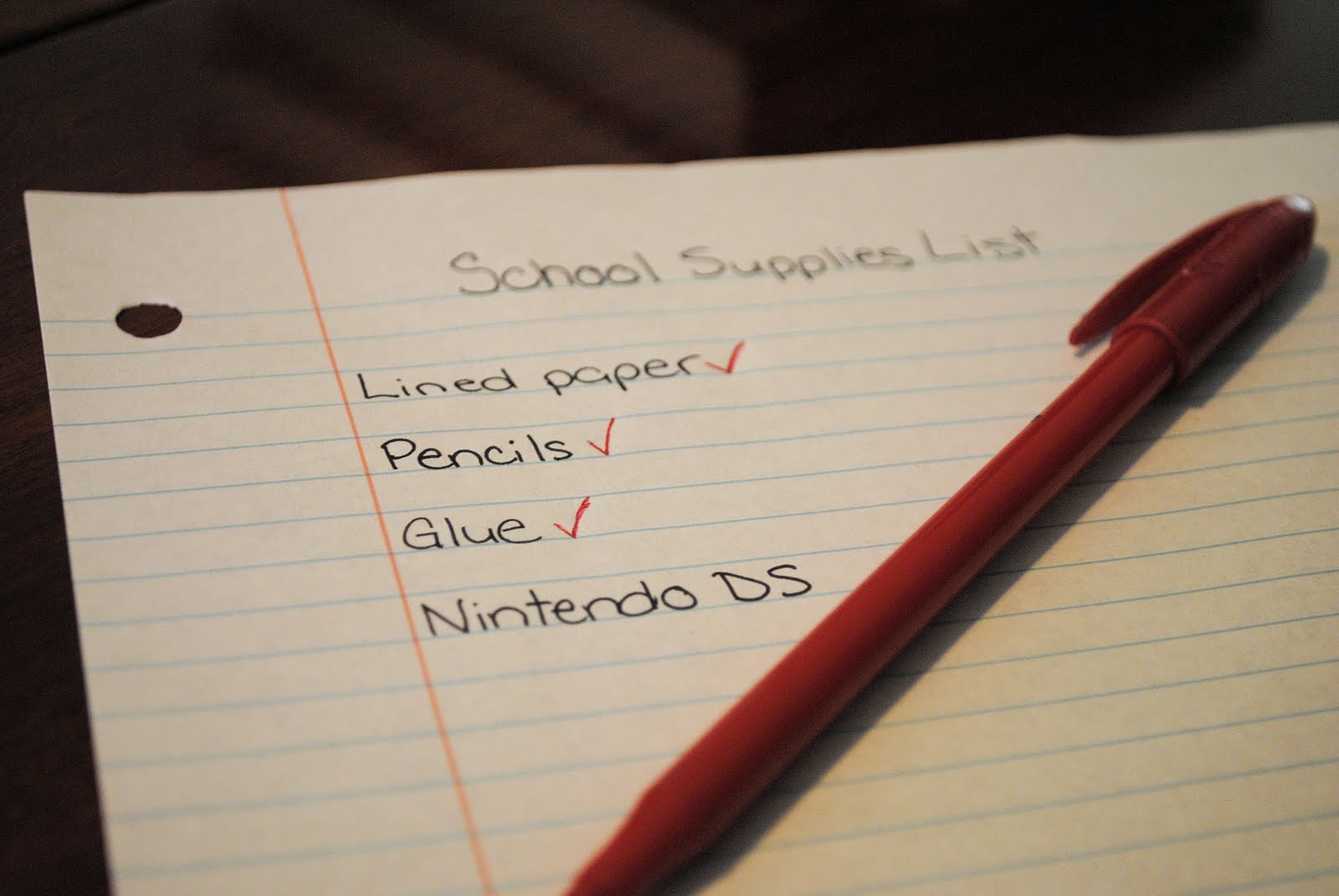
The psychologist was referring, of course, to the Nintendo Dual Screen (DS) portable video game system. Armed with a built-in monitor and a “touch screen” located just below, most Nintendo DS games are controlled in part or in whole using a small stylus. Seeing as how the original incarnation of the DS is more than half a decade old at this point, that’s nothing astonishing anymore. But while immersed in the special education setting, an idea popped into my head: What if we used the Nintendo DS as a way for children with physical and other disabilities to build their motor skills? The stylus is held and operated just like a pencil – a skill that could transfer to school work – and in some games, like Brain Age, writing numbers and letters is the key to advancing.

“So what?” you might ask. “A pencil and paper is about $199 cheaper.”

That’s a good point. However, writing letters and numbers over and over again on a sheet of paper is about as entertaining as doing 500 pushups and it’s just as tedious. What DS games can offer today’s learners is motivation: There’s something highly satisfying about moving ahead and being able to measure one’s progress, whether that progress is deeper into the dank and dangerous dungeons of the newest Castlevania game or to new scholastic heights in Big Brain Academy.

Consider this: According to educational theorist James Gee in his book Why Video Games are Good for Your Soul: Pleasure and Learning (2006), as human beings, enjoyment plays a huge role in our learning. “Learning is a deep human need, like eating and mating,” he said. “So the real paradox is not that pleasure and learning go together, but, rather, how and why school manages to separate them” (p. 29).

Using DS games, then, could be one of the steps to reconnecting schools with the pleasure of learning. For students who find learning difficult – like possibly children with motor skill or other disabilities – an education that includes a little Nintendo DS learning fun might be just the thing to help invigorate their scholastic careers.

As my CSE meeting wore on, the parent now on her way, I also wondered if the educational applications of the Nintendo DS aren’t limited to special education learners. What about other types of students?

According to a July 11, 2007 article in the Wall Street Journal entitled “Beyond Pokemon: Nintendo DS Goes to School in Japan” by Yukari Iwatani Kane, the DS has been helping English as a second language (ESL) students increase their grasp of the English language. As students write English words like “tree” and “woman” on their school-supplied DS systems, an electronic voice calls out “Cool!” if the student writes the word correctly or “Come on!” if he or she makes a mistake.

“Work sheets were such a pain,” said Minori Yamanaka, a 13-year-old student at Otokoyama Higashi Junior High School. “These exercises feel like a game” (Kane, 2007).

But it’s not just Japan that’s utilizing the Nintendo DS for educational purposes, and it’s not just for language acquisition: According to an article by Lousie Holden in the Irish Times entitled "How Nintendo Can Boot Your Child's Perfomance in Maths," published Nov. 10, 2009, at least two schools in Ireland are using the Nintendo DS to teach math skills to their middle school students. The results, she said, are encouraging.

“Three classes spent approximately 15 minutes a day using two games, Maths Training and Brain Training,” wrote Holden. “All three classes in each grade were given mathematical tests (Drumcondra tests) before and after the trial period. The results of the Drumcondra tests were as follows: In 6th-class maths, relative to their peers, the Nintendo group scored substantially better. Gains were ‘obvious and significant’” (Holden, 2009).

So if the DS really aids in grasping the English language with students in Japan, why couldn’t it work with ESL students anywhere? And if Japanese and Irish schools are already implementing the Nintendo DS in their classes with educational success as Kane and Holden point out in their articles, why not in American special and general education classrooms as well, with software specifically designed to achieve maximum educational benefits?

It comes down to a lack of time for teacher training and wide scale implementation of the DS devices, the stigma that Nintendo products are for entertainment only and, of course, a lack of cash for the hardware and software.

“There is definitely support for the idea, but whether we can get money for it at this time is questionable,” pointed out Robbie O’Leary, principal of Sacred Heart Senior National School in Killinarden, Tallaght (Holden, 2009). O’Leary’s remarks no doubt echo the concerns of other educators in schools across the globe.

Back at my CSE meeting, an overwhelmed mother was relieved as a set of important services for her child were put into place. As I left the meeting, I too was a bit overwhelmed, my mind abuzz with educational possibilities and problems of Nintendo’s popular portable.

Sunday, November 22, 2009

Thinking Critically: A Link to the Past

Back in the ‘80s and early ‘90s, my de-facto response to the assertion that video games are a waste of time was that gaming improved the player’s hand-eye coordination. Truth be told, I wasn’t sure how hand-eye coordination was going to help kids aside from making them better at Nintendo games, which in turn would help them build their hand-eye coordination even more. But generally, the hand-eye thing made naysayers shut up, so I was more than happy to just leave things at that.

It wasn’t until the early 2000s that I began searching for response that would not only quiet the scowling adults in my life, but something that would satisfy ME as well. With the advent of 3D graphics, CD quality sound and a more informed and critical society, the whole hand-eye coordination ruse was becoming stale. Thanks to new iterations of my old favorites like Final Fantasy and Castlevania, as well as fresh intellectual properties like Silent Hill and Metal Gear Solid, I was able to put together cohesive, accurate and compelling pro-gaming arguments that could be backed up by evidence found in the “texts.” English teachers had been drilling into my head for years that this is how one puts together a strong, viable argument, and I finally had something beyond “gaming help players utilize their hands better.”

But most of the benefits I’ve noted over the years have applied almost exclusively to titles from the late ‘90s through the current crop of PS3, Xbox 360 and Wii titles. I still had little with which to defend the Nintendo games of my youth other than the tired hand-eye coordination spiel.

Enter Nintendo Power, the one-time undisputed king of gaming magazines. Nintendo Power had rescued me plenty of times in the past with tips and strategies for games like Blaster Master, Metroid and Super Mario Bros. 3, and it was about to give me a final, important tip.

Having succumbed to my latest bout of nostalgia about two weeks ago, I found myself thumbing through the March/April 1989 issue of Nintendo Power, the one with Ninja Gaiden on the cover (the real one, not that Xbox thing). When I was younger, I used to skip the “mailbox” section of the magazine and dive right into the information on the new and future NES games I would soon be conning out of my parents. What kid wouldn’t?

But in my old age, I’ve come to appreciate things like thoughtful discourse and opinions beyond “this game rules” or “this game stinks.” Now one of the first things I do when I pick up an old issue of Nintendo Power is to read the letters. At the very end of the section in this particular issue was a letter from Steve Gibbs, a parent from Benicia, CA.

“I’m a high school English teacher [and] a newspaper columnist,” began the letter (p. 6).

Wait a minute! I’m a certified English teacher and I wrote for newspapers for five years. Mr. Gibbs had earned my attention.

“As an educator, I’m concerned with video saturation,” wrote Gibbs. “I’ve always been mildly approving of video games as long as the cash and time involvement was not too great.

“However, I want my son to develop more than hand-eye coordination.”

Gah! The eight-year-old inside me reeled from the titanic blow. Without hand-eye coordination to hide behind, I was nearly defenseless against my elementary school teachers, my dismissive relatives and the disapproving store clerks who reluctantly sold my parents overpriced Nintendo software! What I had left was the argument about games increasing reading skills, but the only games that didn’t butcher the English language at the time were Final Fantasy and Dragon Warrior, and only the smart kids played those games anyway.

Emperor Mario was naked.


But lo! Just when things were looking bleak for young Matt, Gibbs pointed out something that has been so inherent in my way of life for so many years that I had failed to even think about it.

“I believe your company offers great potential for being accepted by parents as well as children because several of your game cartridges require so much more than simply quick reflexes,” he said. “I’m referring specifically to The Legend of Zelda and Zelda II – The Adventure of Link. The level of critical thinking and problem-solving required make these games an acceptable challenge for the son of a school teacher, and I whole-heartedly defend [Nintendo] against the critics among my peers.”

Gibbs goes on to suggest that “critical thinking is a hot issue in the educational world” and, therefore, Nintendo should create more “thinking games.”

Eureka! That was it, the argument I should have been using for years! Indeed, many Nintendo games force the player to think logically and critically, and to solve problems in ways beyond using brute force. The Zelda series is a good example, but so are games like Maniac Mansion, The Adventures of Lolo series, Solomon’s Key, Tetris, StarTropics* – the list goes on.

Of course, many "mindless" Nintendo games are about shooting your way though endless waves of alien spaceships or dudes punching out hundreds of ninjas to save the president. But before I get into that, let’s look at Gibbs’ parting statement: “Teachers and parents are stressing children’s deeper involvement in problem solving, strategic planning and inductive and deductive logic. This could be one of Nintendo’s trends for the future.”

Not only was Gibbs an English teacher and a newspaper man, but apparently he was a clairvoyant as well, because he predicted one of the most important trends in gaming history. Almost as if following his suggestion, Nintendo added more and more puzzle-solving and critial thinking aspects to their games as time went on. Other companies caught on too, and now you’d be hard-pressed to find a current generation title that doesn’t involve strategic elements in some form. Those “mindless” games I referred to earlier are almost a thing of the past.

In his book What Video Games Have to Teach Us about Learning and Literacy (2003), educational theorist James Gee calls this aspect of gaming “one very important type of active learning” (p. 127). Gee outlines the steps of this kind of learning using the 2001 game Return to Castle Wolfenstein as a base, but his diagnosis can be applied to all video games that require critical thinking strategy, both past and present.

Gee’s observations, paraphrased:
1. The learner realizes the routine strategy will not work and stops using it.
2. The learner transfers skills and strategies from previous experiences by seeing the similarities between those experiences and the current problem.
3. Unlike school, where problems are obviously set up to transfer earlier solutions to later problems, the learner must adapt and transform earlier experiences to new problems “through creativity and innovation” (p. 127).
4. The learner also uses what he or she discovers, sometimes by accident, as soon as possible. This transforms the player’s strategy once again, producing a fluid, ever-changing problem solving approach.

On-the-spot problem solving influenced by old and new experiences: That sounds a lot like what one has to do to master driving, to succeed in his or her career, and to effectively communicate with other human beings. So, according to Gee’s active learning model, while I was searching for new warp zones in Super Mario Bros., finding more efficient ways to climb the girders in Donkey Kong, and discovering my enemies’ weaknesses and immunities to different weapons in Mega Man, I was also refining my critical thinking skills and opening my mind to new ways to solve problems.

Forget hand-eye coordination; critical thinking is where it’s at!

Though he’ll probably never know it, I’m very thankful to Mr. Gibbs for grabbing his pen or typewriter more than 20 years ago and writing into the then-fledgling Nintendo Power magazine with something he thought was important. It WAS important, Mr. Gibbs, because you and James Gee just helped me fill in an intellectual gap that’s been cheesing me off for the past two decades. And now that I’ve shared it with the people reading this, armed with my newfound knowledge, I’m going to look up my fourth grade reading teacher in the phone book (it should be easy because, for some reason, my hands always go where my eyes are looking) and tell her why she was wrong when she said that video games will rot your brain.

*Note: The first StarTropics title contains one of the most diabolical puzzles in gaming history. The game was packaged with a letter to the player from one of the game’s characters, Dr. Jones. Near the end of the game, the player receives a message from Dr. Jones that reads, “Evil aliens from a distant planet... Tell Mike to dip my letter in water...” Most players thought this was referring to an in-game object and spent hours searching for it, but to no avail. However, as you might have guessed, if the player dunked the letter he or she received with the game underwater, the information needed to proceed – written in invisable ink – was revealed.

Saturday, November 14, 2009

Interactive Fiction: The Missing Link

From Ooze: Creepy Nites
While absentmindedly browsing through the content of the "abandonware" website House of Games one night before going to bed, I discovered a game called Ooze: Creepy Nites. Expecting some moderately entertaining, slime-saturated action game from the late ‘80s, I said “what the heck” and clicked the link to a description and download. There was probably slime there somewhere, judging by the screenshots, but something in the review made me forget all about cheap horror thrills: The game, they said, is an “interactive fiction” title.

For some reason, before seeing the phrase “interactive fiction” on that web page, it had never occurred to me that the genre is brimming with education possibilities – especially in the English language arts field. It was exciting moment for me, even more so than if Ooze had been the forgettable Super Mario meets The Blob experience I had anticipated.

For those of us who are late to the party, interactive fiction is a genre of video games that presents information and gameplay textually. The idea is to immerse the player in the story in the same way a novel would. Older games of the genre have no graphics, only text. Newer titles like Ooze: Creepy Nites utilize some graphics, but the words are still the most important part of the game. The player interacts with the game by typing commands such as “go west,” “take credit card” or “use hamster in microwave,” depending on what’s in his or her inventory and what's available in the surroundings. Interactive fiction games require the player to carefully read pages and pages of text, to keep track of many small details, and to creatively solve problems.

The swanky contents of The Lurking Horror game box
Games like Zork, Beyond the Titanic, The Lurking Horror and almost every other title ever made by the company Infocom belong in the interactive fiction category. I’ve always called games like these as “text-based adventures,” but that’s probably because I’m a console player at heart and these kinds of games are mainly PC/MAC affairs. I guess that before reading that Ooze: Creepy Nites review, I was sort of out of the interactive fiction loop.

You might be thinking: "Okay, so you play the games by reading text. Big deal."

But here’s where it gets really exciting for educators: According to Nick Manfort and Paulo Urbano, authors of an extensive article on interactive fiction called “A Quarta Era da Ficção Interactiva” originally printed the Portuguese magazine Nada about three years ago, interactive fiction works can be understood both as literary narratives and as video games. That’s a powerful assertion: Perhaps interactive fiction is the truest and most practical melding of education and video games to date.

I think one of the reasons that some students find the standard English fare boring is because they’ve grown up in an interactive world and the ELA cannon is about as linear as possible. In a era where entertainment comes in the form of minute-long YouTube videos and the user is basically in control of every second of his or her leisure time, the methodical pace of classic works like Dickens’ Great Expectations and Wharton’s The Age of Innocence is putting off our students. Interactive fiction games might be just the thing to reverse situations like this.

I’m not suggesting that we dumb down the classics by using interactive fiction versions to further fracture the attention spans of today’s youth; it’s quite the opposite, actually. By tapping into their need for stimulation by putting them in control of interactive fiction games, our students might be motivated to read the often sizable blocks of text in between player actions. As they get used to reading and comprehending – having been reintroduced to an ancient art though a modern medium – they’ll perhaps be more willing and capable to tackle the English cannon and reading in general.

Taking it one step further by having our students create their own interactive fiction games or websites is another wonderful possibility. Not only would the students have to keep track of plot elements, grammar, word usage and a host of other critical writing techniques, they would also have to learn programming techniques and game design mechanics. By combining the old with the new, teachers might be able to tap into a third set of emerging skills that could help define the next generation of authors.

You know, I still haven’t download Ooze: Creepy Nites, due in small part to the game’s atrocious spelling of the word “nights,” but mostly because my mind has been buzzing with the possibilities of interactive fiction in the classroom. I’m sure the game won’t be that great given the silly graphics and storyline, but it just might be the missing link between gaming and education that I’ve been searching for.

Yeah, I just ended a sentence with a preposition. I’m so exited, I don’t even care.

Sunday, November 1, 2009

Les Misérables: The Fighting Game

If you ever wanted to beat up one of the characters from Les Misérables, here’s your chance.


Arm Joe, created by an amateur programmer from Japan, is a one-on-one fighting game in the same vein as Street Fighter II and King of Fighters. Based on the Les Misérables musical, the game features anime style representations of Les Mis characters like Jean Valjean, Enjolras, Marius, Cosette, Éponine, Thénardier and Javert. The physical embodiment of judgment serves as the game’s final boss.

In case you’re wondering, the name Arm Joe is a parody of the play’s Japanese title, Ah Mojou, meaning “Ah, cruelty.”

As someone who has daydreamed about a one-on-one fighting game adaptation of Upton Sinclair’s The Jungle and a first person, 3D version of Nathaniel Hawthorne’s The Scarlet Letter, there’s a certain amount of satisfaction in just knowing that Arm Joe exists. However, the game itself has some control and balance issues: Some characters are hopelessly underpowered and others can easily win matches using a single attack over and over again. The graphics and sound are excellent, though, and overall it’s a pretty decent game. Given the fact that Arm Joe is a free download, it seems a little inappropriate to criticize it too harshly.

Arm Joe brings the characters of Les Misérables to life in a way that’s virtually impossible in any other medium. Introducing students to Arm Joe might just be the key to getting some of them interested in the novel or the musical, or it could be used as a sort of enrichment exercise after finishing Les Misérables in class.

Purists might complain that this game isn’t a faithful adaptation of the Les Misérables novel or musical – and they would be correct. Just consider Robojean, the cyborg version of Valjean who fires rockets at his opponents, and Ponpon, a bunny creature who has nothing to do with the Les Mis mythos who is inexplicably tossed in with the rest of the characters. However, a creative teacher might take the opportunity to discuss the differences and similarities between the works, as well as talking about how ideas, stories and sensibilities change as they move to new kinds of media. After all, there are some key alterations between the stage version of Les Misérables and Victor Hugo’s original novel, so changes in new adaptations of the story are to be expected.

Teachers might also use Arm Joe to help explain the concept of parody to their students, given the humorous aspects of the game in contrast to the seriousness of the musical and novel.

I hope that more game makers, both independent and commercial, will use classic novels as inspiration for future video games. Faithful game adaptations of the classics might be one of the stepping stones in using gaming to educate our students.

Download Arm Joe.

Sunday, October 18, 2009

The Challenges of Implementing Gaming in the Classroom

There are plenty of formidable obstacles that educators and game developers must overcome before video games can be a viable teaching tool in traditional classrooms.

1. Most video games require skill.

You can tell this kid's got the skillz!
With a textbook, novel or handout, teachers can assign chapters for their students to read. Each student is given the same amount of reading, and baring any sort of disabilities, everyone has the same “chance” of completing the assignment. But with a video game, in which progress is skill-based, there’s no guarantee a student will be able to finish the assignment. Also, unlike a book, one can’t just skip to the next chapter if they haven’t done their homework the previous night. If the player cannot complete a task in a game, there is often no way to continue. Making the game easier is one way to even the odds, but that often deadens the impact and would rob the students of the full gaming experience.

A creative teacher might find a way around this by asking his or her students to poke around with no specific goals other than sampling the atmosphere of the game. Some games, like Myst, can be played for hours in a very satisfying way without advancing the plot.

2. No two players will have the same experience.

If everyone reading this blog decided to play through the same video game – even a more linear one like the first Super Mario Bros. – we would all have different experiences. A longtime player might finish the game in about ten minutes (warp to world 4-1 at the end of 1-2, warp to world 8-1 at the beginning of 4-2, then finish the game as normal). A first time player might spend hours falling down pits and cursing Nintendo, and without skipping levels, eventually finish the game by the skin of their teeth. Others still might decide to collect every coin they see and never make it past the first few stages.

Compare this to reading a novel or a textbook. There’s a definite beginning and end to printed material, defined by how many words and pages are in between Point A and Point B. While the reader can (and should) bring his or her experiences to the material, everyone who reads the assigned text will have been exposed to exactly the same content.

Obviously, divergent experiences might lead to some difficulties in uniform teaching. However, this situation could lead to a creative discussion or assignment where everyone’s experiences are melded into one main idea or project.

3. It’s a lot easier to read a boring textbook than it is to play through a boring game.

What was the worst book you had to read in high school? Was it a chore to finish? Did it hurt your head? Now imagine reading that book six times in a row. It doesn’t sound appealing, does it?

I hate you AND The Jungle, Upton Sinclair!

Some video games last for 100 hours or more, where as a textbook or novel will likely take much less time to complete. Anyone who’s ever dropped $50 on a bad video game may have found themselves slogging though it on principle, but that was by their own choice. Assigning a gaming experience that the student finds tedious might actually do more to push them away from education than assigning a dull textbook.

4. Games are expensive and require specific consoles to function.

Imagine that, as an English teacher, I ask my students to play up to the Returners’ Hideout in Final Fantasy VI. The school would have to provide each student with Playstation, a memory card, a controller and a copy of the game. Assuming the school is paying list price for the equipment, that’s approximately $85 per student without tax ($50 for a PS1, $15 for a memory card and $20 for the greatest hits version of the game). If I’m teaching 120 students, that comes out to be $10,200.

Hey, he's pretty good!
This scenario is for old hardware and an old game. If I wanted my students to experience a newer game like Metal Gear Solid 4: Guns of the Patroits on the PlayStation 3 platform, the price jumps to $39,600: $300 for a PS3 with 80 gig hard drive and $30 for the game. And unlike textbooks (especially those in the English language arts), gaming equipment can’t be used for very many years in a row; just look at what happened to EVERYONE'S Xbox 360s.

Clearly, there would need to be a different distribution method if gaming in the classroom is to be a viable option. Digital distribution is by far the cheapest, and a license for use by 100 or more students could likely be obtained for a fraction of the cost of hard copies.

Great for lit crit!
Conclusion: Though the educational potential of the video game medium is great, as gaming exists today, there are too many difficulties putting it to use in mainstream classrooms. My recommendation at this point is for teachers is to use gaming to enhance their lessons, just as they might use allusions to films or books to cement concepts in their student’s minds. For example, one might compare the events of Henry James’s The Turn of the Screw to those in the Silent Hill series. In both, it’s never clear if the protagonist is hallucinating or if the supernatural events seen through their eyes are truly happening. Students familiar with Silent Hill will gain a deeper understanding of The Turn of the Screw, and those who aren’t won't lose anything. Similarly, a social studies teacher might suggest to his or her class that they spend some time with the History Channel video game Civil War: A Nation Divided. While it’s a fictional account of real events, the game can help illustrate the look and feel of the period and help bring history to life in the minds of our students.

For the younger crowd, video games can be used to enhance reading skills. Many role playing games like Dragon Quest, Final Fantasy and even the accursed Pokémon are text-heavy and provide wonderful motivation to improve the player’s reading ability.

Finally, remember that all knowledge is power. Think back to a time in your life when you solved a problem with something you learned from a game show, a film, or a novel. Consider that a student of yours might find themselves in the same situation, using knowledge from a video game to aid them.

Saturday, October 10, 2009

The Value of Gaming in Education

When you think of video games, what comes to mind? Tiny spaceships shooting down invaders from beyond? Bleeps and bloops? High scores?

Space Invaders, early 1980s
Times have changed. Game soundtracks are now orchestrated, the visuals are on par with anything one might see in a computer animated Hollywood film, and the storylines go far beyond shooting down aliens or saving the princess. Games are no longer relegated to the back of pizzerias and instead are found in homes worldwide. Just like the internet, children born after the year 2000 are growing up with interactive entertainment at their fingertips.

So if gaming is wide spread and accessible, and our students are compelled to complete Halo and Modern Warfare more than their homework, why, aside from a few uninspiring “edutainment” titles, haven’t we acknowledged the educational potential of this fledgling medium?

I am convinced that video games are one of many new texts of the younger generations, going hand-in-hand with web pages, blogs and other forms of digital media. If teachers do not embrace this and other forms of neo-literacy, I fear we will be left in the Stone Age of education, hardly able to reach our students.

Now you might be thinking: “Okay, so what can a student learn from a video game, aside from how to throw fireballs and blow things up?”

According to educational theorist James Paul Gee in his book What Video Games Have to Teach Us about Learning and Literacy, video games can aid in developing problem solving skills. In a speech at Vassar Collage on April 2, 2009, Gee used the game Portal as an example, saying that players must find unorthodox ways of getting their character from Point A to Point B. Those skills, he said, can be transferred to real life situations. Instead of moving a character in a video game, Portal players may one day use similar logic to move a building or find a new way to transport a large group of people.


From the game Portal, by Valve

Gee also said is that for learning to take place, one must be emotionally involved with the material. Video games fit the bill better than any other form of media available. Combining education and gaming would be an excellent way to provide an emotional component to what we must teach students. Gee used Sid Meier’s Civilization as an example: One might not feel much of a connection to an event like Custer’s Last Stand, but if one were to try to come up with ways to change the outcome of the event, he or she might feel much more “in tune” with it.

There are other applications as well. As technology improves, so to do the number of high-quality video game narratives that utilize foreshadowing, irony, metaphor and more – all the things that English Language Arts students must know to succeed – in ways equal to much of the cannon literature of the curriculum. For example, the games Silent Hill 2: Restless Dreams and Rule of Rose rival pieces like The Yellow Wallpaper and The Bell Jar in terms of delving into the psychology of a fragile mind; Braid and Earthbound pack as poignant and metaphorical punch as Animal Farm; and the Metal Gear Solid series, in ways just as memorable as any war novel I’ve ever read, makes real the horrors of battle and the effect on the individual, while also calling into question what it means to be a hero.

One of Braid's many puzzles

It will be a long, tough road to convince the masses that gaming has more value than just mindless entertainment. However, that day can and must come, lest our tech-hungry students become bogged down in the quagmire of educational malaise and our teachers fight an unwinnable battle.

Tuesday, June 16, 2009

Ghostbusters the Video Game: Bustin' Make You Feel Good!

If you’re anything like me, you used to spend your Saturday mornings in front of the television with a bowl of Cap’n Crunch waiting for The Real Ghostbusters (and that God-awful Slimer show) to come on, you dragged your poor mother to the theater the morning Ghostbusters II hit the theaters and you can practically recite the Ghostbusters film word for word. If that sounds like you, just get in the car and don’t take your foot off the gas until you’re at the mall, because Ghostbusters The Video Game is what you’ve been dreaming about for the last 20 years.

For the other six of you still reading this review, I can wholeheartedly say that the newest incarnation of the franchise is the definitive Ghostbusters gaming experience. Up until now, that was sort of like saying that it’s more fun to be beaten with an aluminum pole than with a steel one infested with tiny, venomous beetles. But with a story written by Dan Akyroyd and Harold Ramis, the men behind Ghostbusters and Ghostbusters II, and the voice talents of Ernie Hudson, Annie Potts and wisecracker Bill Murray, Ghostbusters The Video Game will be sucking away your free time for days to come.


Its 1991, two years after Vigo the Carpathian tried to eat baby Oscar with a gooey bathtub and Lady Liberty took to the streets of New York via an NES joystick. The busters, now a city-funded operation like the police and the fire department, must track down the source of the newest surge in supernatural activity that’s crippling the Big Apple.You play as the new fifth Ghostbuster who’s supposed to represent the player, but it’s hard to feel a connection to a generic dude who communicates though frantic hand gestures and getting hit with debris. I’m sick of the silent protagonist shtick and I’m sure most people would have rather played as one of our four iconic heroes, but it’s a minor gripe: The guys come along with you every step of the way, although Winston shows up late to the party yet again. At least he made it this time – remember how Sega ditched him completely in the fun-but-flawed Genesis title?

As one would expect from seasoned comedians, the dialogue and voice acting is top notch. The script is oozing with nods to the films and the guys spout one-liners like a broken fire hydrant. Of course, Peter is as sarcastic as ever, and even item descriptions have a comedic kick. If the game itself becomes boring, the humor and the storyline will keep players engrossed until the game’s conclusion.

The graphics are excellent. The environments are crisp and detailed and the ghosts are slimy and disgusting. The character models share the likenesses of their on-screen counterparts, but after 25 years with the film, the gang looks a little weird with polygonal skin.


Perhaps the game’s greatest accomplishment is that it the player truly feel like he or she is a Ghostbuster. Fighting and incarcerating spirits a lot like wrangling cattle or tying to stop a child from running into a toy store: One must be patient, and at first, it’s more difficult than trying to push smoke into a bottle with a baseball bat. But within a half hour, the player has a good grip on the action, though the default control scheme leaves a bit to be desired in the weapons department. Movement is done via the two control sticks and can sometimes be a little chunky, but it’s nothing that can’t be forgiven, or a least ignored.

The action can be tense like Silent Hill as the player tracks down spirits with his or her PKE meter, or it can be frantic with waves of ghosts descending with reckless abandon. Both styles keep the player entertained on their toes.
The multiplayer is fun with teams of up to four taking on different tasks together, such as busting bunches of ghosts or protecting valuable artifacts from ethereal assailants. The team aspect helps players bond, but the action gets stale quickly. The story mode is where Ghostbusters The Video Game really shines.

Unfortunately, recycled elements from the Ghostbusters mythos give this title a “been there, busted that” feeling, knocking it down a notch. It’s a catch 22: It would have been downright sinful to make a Ghostbusters game without Slimer trashing a hotel and Staypuffed stomping through NYC, but it’s sometimes tough to accept Ghostbusters The Video Game as the sequel to the films like Aykroyd intended. Several parts of the game shamelessly play on two and a half decades of Ghostbusters nostalgia, but many players will eat it up with a silver spoon. The rest of us can’t help but smile and move on, hoping the rest of the game will be more of its own title than a shadow of things past.

That being said, Ghostbusters The Video Game stands up both as an entertaining extension to the Ghostbusters universe and a good video game experience. Existing fans and people new to the Ghostbusters mythos should take this one for a spin, because bustin’ really does make you feel good.