Remember Deadly Towers for the NES? Most people think it’s one of the worst games ever, and for good reason: Endless dungeons, hours of aimless wandering and a weakling main character do not a good game make. But you know what? I see potential in good (bad?) ol’ DT, so I decided to mail a letter to Brøderbund Software, the people who brought us Deadly Towers 24 years ago, and urge them to release some sort of sequel or upgrade to the original game. Here’s what I sent in its entirety.
Aug. 9, 2010
To Whom It May Concern,
It didn’t have to be this way, Brøderbund Software. Deadly Towers (1986) could have been one of the best early offerings on the Nintendo Entertainment System. Instead, it’s been the butt of every half-hearted reviewer’s jokes since Al Gore invented the internet. Now that you’re a part of Navarre Corp. and therefore pulling in millions from FUNimation Entertainment’s sloppy anime dubs, I think it’s about time that Brøderbund remade Deadly Towers.
Here are a few suggestions:
- Purchase the rights to the next Metal Gear Solid title and rename it Neo Deadly Towers. I know this would be nearly impossible, not to mention immoral, but imagine how satisfying it would be to see a Deadly Towers game getting near perfect scores from all the major gaming publications.
- Let’s say you go the less expensive, more rational route and make your own game. A few simple changes to the original’s mechanics could make Deadly Towers great. Firstly, no one likes being killed in the first 13 seconds every time they play. Perhaps giving the main character, Prince Myer, more hit points than a naked old man brandishing a respirator would make Deadly Towers a more enjoyable experience.
- On the subject of hit points, Prince Myer should begin each game with full health instead of just the default 100 HP. Deadly Towers is not Metroid; no one wants to put up with refilling their life whenever they play.
- One time when I was playing Dragon Warrior, I unequipped my sword and tried to take down the game’s penultimate villain, the DragonLord. Each blow I dealt him resulted in almost no damage. That’s how it feels whenever I hit the attack button while playing Deadly Towers. To counteract this, increase Prince Myer’s strength to the point where he can take down weak enemies in one or two hits, not one or two thousand.
- “Secret” entrances to a huge, pointless dungeon randomly placed throughout the game world don’t look like they were planned; they look like programming errors. Make a door sprite and label it “Huge Pointless Dungeon.” Use it on top of every dungeon entrance.
- On a similar note, put something useful in the dungeon beyond some old dude who sells you worthless stuff for all your cash. Maybe more than one set of armor would be in order, or at least a sexy 8-bit chick surrounded with health, items and money. And whisky. Add whisky.
- Finally, if all else fails, make the next Deadly Towers game a World War II-based first person shooter compatible with Xbox live. The 12- to 16-year-old crowd will flock to it and play hours of death matches, because real combat isn’t a tragedy, it’s hella fun!
I hope my suggestions will help you to improve upon your original Deadly Towers formula, and perhaps a rebalanced version of the game could be made available on your web site. I have faith in Brøderbund Software, and perhaps against my better judgment, I have faith in the Deadly Towers franchise. I wouldn’t have spent my time sending this letter if I didn’t. Show the world that after nearly 25 years, Deadly Towers is nothing to laugh at.*
*Unless you mess it up again.
Sincerely,
Lifelong Video Gamer
If I receive a reply of any sort, you can bet that I’ll post it here!
Tuesday, August 10, 2010
Monday, August 9, 2010
Zone of the Enders: Not Just a Metal Gear Solid 2 Demo Anymore
Poor Zone of the Enders. Like the younger, quieter bother of the high school track star or baseball prodigy, the only reason people even knew about this PS2 game is because it came packaged with a demo of Metal Gear Solid 2: Sons of Liberty, the sequel to one of Konami’s hottest PS1 games. To be fair, this gimmick might have been the only way to sell a significant amount of copies of Zone of the Enders, because the game itself is unremarkable: It’s short, the storyline provides little in the way of closure, and there’s mot much here that experienced action gamers haven’t seen before. But ZoE also has a sliver of charm all its own, which, if you’ve got the time, makes the game worth playing.
The story is lifted almost directly from every mech anime ever. In the heat of battle, a hobo child named Leo unwittingly becomes the pilot of Jehuty, an advanced “orbital frame” (read: Gundam). Leo is forced to kill to survive and he makes everyone in the game well aware of his displeasure through a futuristic technique known and “b*tching and moaning every five minutes.” Whiny, whiny Leo is cursed with the most static personality Konami has ever penned. I wished more than once during the cutscenes that there was a button combination for wrapping Leo up in a carpet, covering him with honey and leaving him next to a bee hive that someone just hit with a big stick.
Thankfully, every other aspect of the game compares favorably to the storyline. The graphics are still pretty good, even by today’s standards. Normal enemies and backgrounds look suitably space-age and bosses are big and detailed. The first time you take control of Jehuty, you’ll have great fun zooming about the screen, blowing things up like there’s no reset button. However, the controls are a little wonky and take some to master; even after finishing the game, I still had some difficulty keeping my mech on course. The action is repetitive, but that's all right, as the game is so short and the fighting is great. Jehuty’s giant death ball, crazy lasers and one heck of a sword give you the advantage in battle, while a boost button increases the speed of the gameplay exponentially.
Zone of the Enders’s technoish soundtrack ranges from head-bangingly awesome to boring background noise. The sounds are fitting but forgetful, but you might find yourself reaching for the mute button anyway: Every time your situation changes, such as your health going below 50 percent or running out of ammo, Jehuty announces it an a tooth-grating, monotone voice.
“I suggest you escape from this battle,” says Jehuty when your health is low.
“I suggest you shut the heck up and let me play the game I purchased,” I reply, though I know it can’t hear me.
The ending is not satisfying in the least and playing the game a second time through will leave you wanting to hurt yourself at about the midway point. Zone of the Enders is fun while it lasts, which is about 10 hours. But if you think about it, 10 hours is a lot more fun than most games can provide.
Maybe because the hoopla surrounding Metal Gear Solid 2: Sons of Liberty ceased long ago, Zone of the Enders will have a chance to be its own game. While it’s nothing remarkable, it certainly ain’t bad. If you want a weekend worth of frantic flying combat and you’re on a budget, I suggest you snag yourself a copy.
Sunday, August 8, 2010
Silent Hill Sunday #1: Next Stop, the Nightmare Town
You wake up sweating and disoriented. Sitting up, your gaze darts wildly about the surrounding area. Then, your heart beat lessens, the terror leaves you, and you let out a sigh of relief. There you are, in your own bed. The only remnants of your nightmare are the now-cold puddle of sweat you’re sitting in, foggy memories of an unpleasant being, and a vague feeling of unease. By the time you’re in the bathroom, brushing your teeth, your mind is already on something else. For you, the nightmare is over.
Now try to imagine a world where the nightmare is never over; a world of constant fear, where you’re already awake, and dying is the only release. Yet, even death may not bring the relief you seek, for what awaits you afterwards may be even worse. This is the curse of Silent Hill.
Since the original title on the PlayStation was unleashed on the unsuspecting gaming public, the Silent Hill series has been terrifying players around the world for more than a decade. After the first two critically acclaimed games and a respectable third entry into the series, Konami’s outings into the nightmare town became increasingly stale and formulaic, despite new gameplay elements introduced to each successive title. While Silent Hill games once required an overdose of tranquilizers and a good therapist to complete, entries like Silent Hill Origins, the sixth game in the main series, inspired as much terror a typical Syfy channel flick on a Saturday afternoon.
However, the recent Silent Hill: Shattered Memories on the Wii shook up the series’ gameplay by removing combat entirely and adding motion controls. Many players think this was the kick in the pants the series needed to revive an ailing franchise. The eighth Silent Hill game is due out in 2011, for Xbox 360 and PlayStation 3.
Regardless of the quality of the gameplay in later entries, the soundtrack for each of the seven games in the series is varied and creepy, incorporating the tag team of Japanese composer Akira Yamoaka and, from the third game on, American singer Mary Elizabeth McGlynn. Yamoaka reportedly will not be producing the music for the next Silent Hill game; taking over the reigns will be Daniel Licht, the music composer for Showtime’s Dexter.
In celebration of a series that took survival horror to such terrifying highs and drab lows, allow me to introduce Silent Hill Sundays here at Wordsmith VG. At least two Sundays a month, I’ll write about a different aspect of the Silent Hill series, from reviews to theories to little-known SH tidbits.
Coming up next: “Have you seen a little girl? Short, black hair. She just turned seven.”
Saturday, August 7, 2010
MOTHER 3 Fanfest Begins; Old Man Prefers Earthbound
Starmen.net, a longtime authority on all things Earthbound/MOTHER announced the beginning of their MOTHER 3 Fanfest yesterday. Just in time to interfere with everyone’s moving back to college, now you too can play though MOTHER 3 in predetermined segments while watching live shows starting Starmen staffers, participating in daily or game-long challenges, and chewing the fat with other MOTHER fans.
You might remember Starmen.net doing something similar with Earthbound/MOTHER 2 in the last ten years. You’re correct: Usually, the web site holds their Earthbound Funktastic Gameplay Event every summer focusing on “getting back in the game” for longtime Earthbound fans. Judging by the positive response the MOTHER 3 Fanfest idea received on the Starmen.net message boards, there’s a lot of excitement and support for the change. The Earthbound event has reportedly been moved back to October.
But there are some out there, like me, who aren’t happy with the change. This year marks the 15 anniversary of Earthbound’s release in the United States and I assumed there was going to be some sort of hoopla that would involve a traditional summer playthough. Earthbound was released in the summer, and for many of us who jumped on the EB wagon in 1995, Earthbound is, was, and always will be a summer game.
MOTHER 3 was released in Japan in April of 2006, with the English translation patch hitting the scene in October of 2008, thanks to the tremendous efforts of Earthbound Central’s Tomato. Since it’s been less than two years since MOTHER 3 was accessible to English-speaking players, I don’t yet see the need for postponing the Earthbound event in favor of playing MOTHER 3. The Earthbound Fanfests were always meant to get people to reconnect with the game that likely ignited their love for the MOTHER series, but MOTHER 3 is still fresh to a lot of players. Having a funfest for it now feels like having a funfest of Resident Evil 5 or Metal Gear Solid 4.
I understand that Starmen.net must evolve if the staffers hope to keep the years-old website fresh, and switching up the Fanfests is one way to do that. Go enjoy MOTHER 3 if you’re so inclined. I’ll be following along too, but my heart just isn’t in it this year.
Thursday, August 5, 2010
Top Five: Video Game Soundtracks You Should Never Listen to While Driving
There are plenty of things you should never do while driving, like using a cell phone, drinking alcohol, shaving, reading the newspaper, eating sloppy joes and listening to political talk shows that are likely to give you road rage. But did you ever consider that the music you listen to in your car could affect your performance as a motorist? Judging by the charred wrecks littering my lawn and the unpaid tickets that taunt me everyday, the right tunes could mean the difference between driving like a kind, nice car champ and a blind, NASCAR chump. Do yourself and everyone else a favor and never hit the road while listening to the following game soundtracks. As my father is fond of telling me, the life you save may be your own. Or more importantly, mine.
Ridge Racer – PlayStation
There are plenty of racing titles I could have put here, but I chose Ridge Racer because every song in the game has been clinically proven to increase adrenaline, disable speed related inhibitions, and cause the listener to mash his or her right foot into the ground as hard as humanly possible. When played in your car stereo, the Ridge Racer soundtrack makes you feel as if your hair has burst into flames, but its okay because you know how to put it out: All you have to do is roll down all of your windows and break the sound barrier with that NASA surplus rocket engine you strapped to the roof of your car. Cops hate speeders, if you’ve got Ridge Racer in your CD player, chances are they’ll never catch up with you to give you the ticket.
Listen to "Rare Hero" from Ridge Racer
Listen to "Ridge Racer" from Ridge Racer
Mother 1 + 2 (Earthbound and Earthbound Zero) – GameBoy Advance
The original Mother game – known in some circles as “Earthbound Zero” – bore the tagline “No crying until the end.” This game and its sequel both live up to that promise, with endings that will make you ball up into the fetal position and weep like a jellyfish-stung baby while simultaneously smiling you rear off, just to spite yourself. Considering the emotional baggage these games heap upon the unsuspecting player, not even the surliest of pirates would be able to keep from bawling with the likes of “Eight Melodies” or Mother 2’s ending theme pouring from their speakers. It’s very, very difficult to explain to a police officer that you drove into the car in front of you because you couldn’t see though the tears. It’s even harder to explain that you were crying because a ragtag group of robot teens thwarted a demonic space alien by praying at it thousands of years ago in your living room.
Listen to "Eight Melodies" from Mother 1+2
Silent Hill series – Multi platform
Anyone who’s ever played a game in Konami’s Silent Hill franchise knows that it was designed to twist unsuspecting gamers into spastic madmen, no longer able to handle all but the most kid-friendly titles. Silent Hill was originally just a way for Konami to sell more copies of Dance Dance Revolution to traumatized players looking for reintegration into gaming society, but some people actually like writhing in psychological agony, so they ran with it.
All official Silent Hill soundtracks lull the listener into a false sense of security by putting an awesome rock or pop song first, then slowly moving into more atmospheric and creepy tracks. Before your know it, you’re listing to the sonic equivalent of 1,000 Satans tying you to a vomit-stained torture rack in an abandoned mental hospital and sawing off your limbs with rusty sporks and shards of broken funhouse mirrors, all while cramming flaming bat guano down your throat. The dangers of listening to a Silent Hill soundtrack while driving include an increased heart rate, intense feelings of paranoia, and wetting the rich, Corinthian leather of your driver’s seat. If you’re foolish enough to listen to Silent Hill tunes at night while on a lonely back road, there’s at least a 3000 percent chance that you’ll wind up crawling out of your overturned vehicle and bolting into the night, screaming like a child wearing underpants made of wasps.
Listen to "Until Death" from Silent Hill
Listen to "Angel's Scream" from Silent Hill: Shattered Memories
Superman 64 – Nintendo 64
Everyone knows that Superman 64 is an abomination unto the Lord and no one should ever play it. This includes the equally horrendous soundtrack. Listening to the tunes from Superman 64 in your car won’t cause you to drive at warp speed or crash into anything, but it will make for a pretty crappy ride to work. When given the option, listen to the news instead: It’s just as aggravating and depressing, but at least you’ll learn something other than the fact that Superman 64’s soundtrack converts disappointment into music at a one to one ratio.
Listen to some music from Superman 64
Mortal Kombat: The Album – Inspired by the arcade game
If you’ve never heard of this gem, then you wouldn’t know that someone through it would be great to convert the bestselling Mortal Kombat arcade game into a poorly received technopop jam fest. In addition to a song based on every MK1 character – except for mildly offensive Asian stereotype Shang Tsung and mysterious palette swap Reptile – there’s also two versions of the infamous Mortal Kombat theme song. So why shouldn’t you listen to this pseudo-game soundtrack while crusing for chicks (or dudes, whatever) in your sweet ride? One word: Kano.
When I purchased this album about 15 years ago, listening to Kano’s theme song, “Use Your Might,” inspired me to create my own Mortal Kombat spin-off game called “Kano’s Go-Kart.” Here’s how I envision the intro movie:
After loading up the game, the screen remains black. Out of nowhere, the player is aurally assaulted with “Use Your Might” from Mortal Kombat: The Album. There’s a series of jaw-shattering orchestra hits.
The wind whips over his half-metal face and through his hair. Kano speeds over the stop sign at the end of the street, reducing it to thousands of twisted metal shards. The deer that had been grazing in the nearby alcove gallop away in terror. Suddenly, Kano’s go-kart screeches to a stop. He gazes onto the unmolested expanse of a suburban Saturday morning.
A female singer, who is probably hot, chimes in: Use your might, Kano fight! The world is at your feet. Fight! Use your might! I’m on your side!
Kano cracks a feral smile and revs up his kart, blasting towards the now-endangered livelihoods of the unsuspecting residents. End intro video; cue title screen.
The object of Kano’s Go-Kart is to destroy as much of suburbia as you can. This includes running over dogs and rabbits, plowing through lawns and gardens, and chasing small children up the stairs of their homes before shredding all of their toys with your kart. There are three power ups: a spinning knife that increases your kart’s maximum speed from 13 to 16 miles per hour, a dragon icon that changes Kano into his MK3 uniform for a limited time, and a grain of rice hidden somewhere in the grass that awards the player a single point upon pickup.
If I listened to Mortal Kombat: The Album in my car, I’d be highly inspired go on a Kano-like rampage, destroying my neighbor’s light posts, mincing garden gnomes, and collecting mailboxes with my windshield. And now you would too, because I guarantee that after reading this article, you’ll think of nothing but Kano’s Go-Kart whenever you hear MK: The Album. I’m sorry that I just ruined any possibility of you ever listening to one of the best/worst video game based albums of all time while driving, but learning about Kano’s Go-Kart is a worthy tradeoff. Well, at least it was for me.
Listen to "Kano (Use Your Might)" from Mortal Kombat: The Album
Drive safely!
Ridge Racer – PlayStation
There are plenty of racing titles I could have put here, but I chose Ridge Racer because every song in the game has been clinically proven to increase adrenaline, disable speed related inhibitions, and cause the listener to mash his or her right foot into the ground as hard as humanly possible. When played in your car stereo, the Ridge Racer soundtrack makes you feel as if your hair has burst into flames, but its okay because you know how to put it out: All you have to do is roll down all of your windows and break the sound barrier with that NASA surplus rocket engine you strapped to the roof of your car. Cops hate speeders, if you’ve got Ridge Racer in your CD player, chances are they’ll never catch up with you to give you the ticket.
Listen to "Rare Hero" from Ridge Racer
Listen to "Ridge Racer" from Ridge Racer
Mother 1 + 2 (Earthbound and Earthbound Zero) – GameBoy Advance
The original Mother game – known in some circles as “Earthbound Zero” – bore the tagline “No crying until the end.” This game and its sequel both live up to that promise, with endings that will make you ball up into the fetal position and weep like a jellyfish-stung baby while simultaneously smiling you rear off, just to spite yourself. Considering the emotional baggage these games heap upon the unsuspecting player, not even the surliest of pirates would be able to keep from bawling with the likes of “Eight Melodies” or Mother 2’s ending theme pouring from their speakers. It’s very, very difficult to explain to a police officer that you drove into the car in front of you because you couldn’t see though the tears. It’s even harder to explain that you were crying because a ragtag group of robot teens thwarted a demonic space alien by praying at it thousands of years ago in your living room.
Listen to "Eight Melodies" from Mother 1+2
Silent Hill series – Multi platform
Anyone who’s ever played a game in Konami’s Silent Hill franchise knows that it was designed to twist unsuspecting gamers into spastic madmen, no longer able to handle all but the most kid-friendly titles. Silent Hill was originally just a way for Konami to sell more copies of Dance Dance Revolution to traumatized players looking for reintegration into gaming society, but some people actually like writhing in psychological agony, so they ran with it.
All official Silent Hill soundtracks lull the listener into a false sense of security by putting an awesome rock or pop song first, then slowly moving into more atmospheric and creepy tracks. Before your know it, you’re listing to the sonic equivalent of 1,000 Satans tying you to a vomit-stained torture rack in an abandoned mental hospital and sawing off your limbs with rusty sporks and shards of broken funhouse mirrors, all while cramming flaming bat guano down your throat. The dangers of listening to a Silent Hill soundtrack while driving include an increased heart rate, intense feelings of paranoia, and wetting the rich, Corinthian leather of your driver’s seat. If you’re foolish enough to listen to Silent Hill tunes at night while on a lonely back road, there’s at least a 3000 percent chance that you’ll wind up crawling out of your overturned vehicle and bolting into the night, screaming like a child wearing underpants made of wasps.
Listen to "Until Death" from Silent Hill
Listen to "Angel's Scream" from Silent Hill: Shattered Memories
Superman 64 – Nintendo 64
Everyone knows that Superman 64 is an abomination unto the Lord and no one should ever play it. This includes the equally horrendous soundtrack. Listening to the tunes from Superman 64 in your car won’t cause you to drive at warp speed or crash into anything, but it will make for a pretty crappy ride to work. When given the option, listen to the news instead: It’s just as aggravating and depressing, but at least you’ll learn something other than the fact that Superman 64’s soundtrack converts disappointment into music at a one to one ratio.
Listen to some music from Superman 64
Mortal Kombat: The Album – Inspired by the arcade game
If you’ve never heard of this gem, then you wouldn’t know that someone through it would be great to convert the bestselling Mortal Kombat arcade game into a poorly received technopop jam fest. In addition to a song based on every MK1 character – except for mildly offensive Asian stereotype Shang Tsung and mysterious palette swap Reptile – there’s also two versions of the infamous Mortal Kombat theme song. So why shouldn’t you listen to this pseudo-game soundtrack while crusing for chicks (or dudes, whatever) in your sweet ride? One word: Kano.
After loading up the game, the screen remains black. Out of nowhere, the player is aurally assaulted with “Use Your Might” from Mortal Kombat: The Album. There’s a series of jaw-shattering orchestra hits.
The garage door of his suburban home slowly slides open, revealing Kano with his hands on his hips, wearing his white MK1 uniform. To his left is a go-kart, a tiny, homemade vehicle with just enough space for an adult rider to sit in the seat and steer, albeit with his knees up his nose. The morning sun shines upon Kano and his marvelous machine.
Kano hops into his go-kart, and with his knees in the air, speeds down his driveway at a blazing 13 miles per hour. The orchestra hits continue, accompanied by an aggressive drumbeat and a face-pounding bassline.
The wind whips over his half-metal face and through his hair. Kano speeds over the stop sign at the end of the street, reducing it to thousands of twisted metal shards. The deer that had been grazing in the nearby alcove gallop away in terror. Suddenly, Kano’s go-kart screeches to a stop. He gazes onto the unmolested expanse of a suburban Saturday morning.
A female singer, who is probably hot, chimes in: Use your might, Kano fight! The world is at your feet. Fight! Use your might! I’m on your side!
Kano cracks a feral smile and revs up his kart, blasting towards the now-endangered livelihoods of the unsuspecting residents. End intro video; cue title screen.
The object of Kano’s Go-Kart is to destroy as much of suburbia as you can. This includes running over dogs and rabbits, plowing through lawns and gardens, and chasing small children up the stairs of their homes before shredding all of their toys with your kart. There are three power ups: a spinning knife that increases your kart’s maximum speed from 13 to 16 miles per hour, a dragon icon that changes Kano into his MK3 uniform for a limited time, and a grain of rice hidden somewhere in the grass that awards the player a single point upon pickup.
If I listened to Mortal Kombat: The Album in my car, I’d be highly inspired go on a Kano-like rampage, destroying my neighbor’s light posts, mincing garden gnomes, and collecting mailboxes with my windshield. And now you would too, because I guarantee that after reading this article, you’ll think of nothing but Kano’s Go-Kart whenever you hear MK: The Album. I’m sorry that I just ruined any possibility of you ever listening to one of the best/worst video game based albums of all time while driving, but learning about Kano’s Go-Kart is a worthy tradeoff. Well, at least it was for me.
Listen to "Kano (Use Your Might)" from Mortal Kombat: The Album
Drive safely!
Labels:
Earthbound,
Eight Melodies,
GBA,
Itoi,
Kano,
Kano's Go-Kart,
Mortal Kombat,
Mother,
music,
N64,
Nintnedo 64,
Playstation,
Ridge Racer,
Shattered Memories,
Silent Hill,
Soundtrack,
Superman 64,
wii
Tuesday, August 3, 2010
Brutal Unleashed: Above the Claw is Below the Standard
What happens when programmers attempt to upgrade a mediocre fighting game and re-release it on a new system? Well, besides a terribly cliché lead sentence, you’re likely to get something along the lines of Brutal: Above the Claw for the 32X, Gametek’s final attempt to cash in on the one-on-one craze of the ‘90s with their furry fighting franchise.
The core gameplay hasn’t changed from the previous titles. Players still take control of a fuzzy fighter and battle their way to the Dali Llama, Kendo Coyote is still slower than grandpa wearing cement undershorts and Foxy Roxy is still hot in the kind of way that makes you ashamed you noticed. What’s so frustrating here is that Gametek had the chance to make the 32X version of Brutal a great game by fixing the imperfections of the previous ports and expanding on the best features. Instead they gave us two useless new characters. In fact, little else has been added to this “upgrade,” which turns out to be Above the Claw’s most fundamental flaw.
On the plus side, the graphics are better than ever. The characters are animated well, and they’re a joy to watch in battle and the lush, detailed environments help add some much-needed flair to the experience. However, many locales are missing some of the clever touches found in the original Brutal game, Paws of Fury. Take, for example, Leon the lion’s old bridge stage, where players can fall off the edge mid-battle if they aren’t careful. For some reason, this and other fun details were removed from Above the Claw. Also, the music that was such a draw for the Sega CD game has been ill-treated to say the least. The new jams have still got that Brutal-ish jungle beat, but there are only three or four tracks in the entire game. Each lasts approximately six seconds and is looped indefinitely, so don’t be surprised if you find yourself reaching for the mute button on your TV set a few minutes after plugging in the game.
The sounds don’t fare much better. All the characters make the same yelps and “hy-yahs,” leading to a very generic aural experience. In another small but annoying omission, Leon no longer plays his guitar riff during his Power Chord attack, killing the move’s humor.
Also gone is the pensive, meditative atmosphere of the PC and Sega CD offerings. The Sega CD version in particular feels like the player has been sucked into a martial arts film, with engrossing story screens detailing what vanquished fighters do after being disqualified from the tournament, philosophical jargon about the true nature of the warrior and a nifty intro sequence to pump you up before game time. This is not the case on the 32X cart, which plays like a watered-down arcade game. The polished presentation of the Sega CD title keeps players interested and helps them forgive the slightly dull fighting sequences in favor of the “feel” of the game. Without the awesome ambiance of the CD version, there’s nothing left to distract you from the tedious gameplay. The two new characters, a bite-sized cat in boxer shorts named Psycho Kitty and possibly the lamest dragon ever, Chung Poe, do little to remedy the situation.
There are six different attack buttons – three kicks and three punches – but they often produce the same punch or kick animation, just faster or slower depending on the strength of the button pressed. There’s little reason to use anything but the most damaging attacks, making the Street Fighter style controller layout unnecessary.
The special move system only adds to the problem. Like in many real martial arts, your character starts out as a white belt. As he wins battles, he’s rewarded with special attacks. Why, then, is it almost as difficult for a lowly yellow belt to defeat the Dali Llama as it is for a black belt? Because the special moves the player acquires are almost always useless. Often, these silly maneuvers send your character careening across the screen, recklessly swinging his or her fists. All your opponent has to do to put a stop to the onslaught is jump over you, turn around, and kick you in the face. I suppose special moves that aid your opponent are a pretty innovative idea, but in practice, they’re far from fun.
As far as the two player mode goes, there’s not much too it. With only 12 selectable characters (and seven that are any good), the two player battles don’t stay fresh for long. As a sort of counter to this, the programmers added Island Conquest, a board-game like mode that has both players battling for the supremacy of Brutal Island. It’s a nice addition, but ultimately, it isn’t much different than the standard versus mode.
Despite its problems though, some fun can be had with Brutal: Above the Claw, if only because the concept of anthromorphs beating the tar out of each other is undeniably cool. But the fun quickly wears off, and players are left with a shallow, button masher’s dream of a game. If you were hardcore (or crazy) enough to get a 32X, there’s a good chance you own a Sega CD unit as well. If this is the case, do yourself a favor and seek a copy of the superior Brutal CD; it’s defiantly a cut above the others. Regardless, Brutal: Above the Claw is more entertaining than the Genesis and SNES ports, and is a fine game to fill an afternoon, but that’s about it. If you see it for a few bucks, pick it up and daydream about the awesome game it could have been.
The core gameplay hasn’t changed from the previous titles. Players still take control of a fuzzy fighter and battle their way to the Dali Llama, Kendo Coyote is still slower than grandpa wearing cement undershorts and Foxy Roxy is still hot in the kind of way that makes you ashamed you noticed. What’s so frustrating here is that Gametek had the chance to make the 32X version of Brutal a great game by fixing the imperfections of the previous ports and expanding on the best features. Instead they gave us two useless new characters. In fact, little else has been added to this “upgrade,” which turns out to be Above the Claw’s most fundamental flaw.
On the plus side, the graphics are better than ever. The characters are animated well, and they’re a joy to watch in battle and the lush, detailed environments help add some much-needed flair to the experience. However, many locales are missing some of the clever touches found in the original Brutal game, Paws of Fury. Take, for example, Leon the lion’s old bridge stage, where players can fall off the edge mid-battle if they aren’t careful. For some reason, this and other fun details were removed from Above the Claw. Also, the music that was such a draw for the Sega CD game has been ill-treated to say the least. The new jams have still got that Brutal-ish jungle beat, but there are only three or four tracks in the entire game. Each lasts approximately six seconds and is looped indefinitely, so don’t be surprised if you find yourself reaching for the mute button on your TV set a few minutes after plugging in the game.
The sounds don’t fare much better. All the characters make the same yelps and “hy-yahs,” leading to a very generic aural experience. In another small but annoying omission, Leon no longer plays his guitar riff during his Power Chord attack, killing the move’s humor.
Also gone is the pensive, meditative atmosphere of the PC and Sega CD offerings. The Sega CD version in particular feels like the player has been sucked into a martial arts film, with engrossing story screens detailing what vanquished fighters do after being disqualified from the tournament, philosophical jargon about the true nature of the warrior and a nifty intro sequence to pump you up before game time. This is not the case on the 32X cart, which plays like a watered-down arcade game. The polished presentation of the Sega CD title keeps players interested and helps them forgive the slightly dull fighting sequences in favor of the “feel” of the game. Without the awesome ambiance of the CD version, there’s nothing left to distract you from the tedious gameplay. The two new characters, a bite-sized cat in boxer shorts named Psycho Kitty and possibly the lamest dragon ever, Chung Poe, do little to remedy the situation.There are six different attack buttons – three kicks and three punches – but they often produce the same punch or kick animation, just faster or slower depending on the strength of the button pressed. There’s little reason to use anything but the most damaging attacks, making the Street Fighter style controller layout unnecessary.
The special move system only adds to the problem. Like in many real martial arts, your character starts out as a white belt. As he wins battles, he’s rewarded with special attacks. Why, then, is it almost as difficult for a lowly yellow belt to defeat the Dali Llama as it is for a black belt? Because the special moves the player acquires are almost always useless. Often, these silly maneuvers send your character careening across the screen, recklessly swinging his or her fists. All your opponent has to do to put a stop to the onslaught is jump over you, turn around, and kick you in the face. I suppose special moves that aid your opponent are a pretty innovative idea, but in practice, they’re far from fun. As far as the two player mode goes, there’s not much too it. With only 12 selectable characters (and seven that are any good), the two player battles don’t stay fresh for long. As a sort of counter to this, the programmers added Island Conquest, a board-game like mode that has both players battling for the supremacy of Brutal Island. It’s a nice addition, but ultimately, it isn’t much different than the standard versus mode.
Despite its problems though, some fun can be had with Brutal: Above the Claw, if only because the concept of anthromorphs beating the tar out of each other is undeniably cool. But the fun quickly wears off, and players are left with a shallow, button masher’s dream of a game. If you were hardcore (or crazy) enough to get a 32X, there’s a good chance you own a Sega CD unit as well. If this is the case, do yourself a favor and seek a copy of the superior Brutal CD; it’s defiantly a cut above the others. Regardless, Brutal: Above the Claw is more entertaining than the Genesis and SNES ports, and is a fine game to fill an afternoon, but that’s about it. If you see it for a few bucks, pick it up and daydream about the awesome game it could have been.
Nightmares: The Story of Polybius
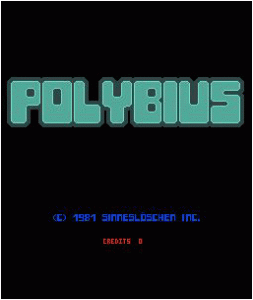
Bill Bailey* steps into the small, muggy arcade. Despite the fact that it’s Saturday, most game machines stand unused, aside from a nearby Pac-Man machine. A new game, Polybius, catches Bill’s eye through the dim arcade lighting. Pondering for a moment, he plunks in a quarter and begins the game. He develops a headache after a few minutes of play, but ignores it. As time goes on, the headache worsens, but Bill ignores it still – he can’t tear himself from the hypnotic lure of the game. Then, suddenly, Bill no longer knows where he is. He runs from the arcade, into the streets, disoriented. Hours later, a motorist finds him wandering out of a local cornfield. When asked who he is and where he lives, Bill can’t remember anything. All he can recall is the arcade. But it couldn’t have been the game that caused Bill’s terrifying experience; it’s just a simple piece of machinery created for entertainment purposes… right?
But according to Bill, it was the game. Bill, now 37, says still suffers from horrible nightmares he thinks came from playing the game.
“It’s really a problem. I can hardly function in the real world anymore,” he said.
For years, Bill had no idea what had happened to him that day in the arcade. “It was a week before I could remember my full name,” he said. All he could remember, he says, was the name of the game he had been playing before he blacked out. Bill had given up looking for answers years ago because his investigations continuously turned up nothing.
However, it was technology that caused Bill’s plight, and ironically, it would be technology that would finally provide him with some answers. In the summer of 2002, Bill stumbled across a web site devoted to old arcade games, www.coinop.org. On a whim, he did a search for Polybius. What he read next was shocking.
It began in a small suburban area of Portland, Oregon in 1981, where Bill had lived as a child. A handful of arcades in the area received a new game, Polybius, without much fanfare. Rumors quickly and quietly spread of players experiencing bizarre symptoms, such as insomnia, terrifying nightmares and even amnesia. The worst cases were said to have been unable to remember vital information, such as where they lived and who they were.
“It’s as if I were reading my own case file,” said Bill, adding, “Knowing I’m not alone in this is both comforting and terrifying.”
Perhaps the most frightening were the accounts of mysterious black-clad men visiting the machines, looking over the hardware but ignoring the money Polybius had earned. Four weeks after they arrived, the arcade machines vanished, leaving nothing but questions. No one has had a verifiable sighting of a Polybius machine since. In fact, the only evidence that the game ever existed is a small picture of the copyright screen that has been floating around the Internet for years.
Discussion of what Polybius truly is continues on many Internet message boards. Some say the game was a secret government experiment utilizing behavior-altering algorithms to create the perfect soldier, while others insist that it was actually Russian in origin. But most feel Polybius is simply an urban legend.
“As far as the existence of Polybius goes, I'm pretty skeptical,” said “Night_Trekker,” a member of www.coinop.org’s message board. “All this talk and only a single, nondescript screenshot? I don't buy that.”
However, for Bill Bailey, it’s all too real.
“I don’t know anything about secret government agencies or men in back. All I want is to be able to sleep at night without waking up in terror every few hours.” Shaking his head, he added, “I just want to be able to live again.”
* Before this gets reposted on every wacky website ever as “absolute proof that Polybius exists,” you should know that Bill Bailey is a fictional character. This mock newspaper feature was created with the intention of informing the reader of the Polybius urban legend, one of the most terrifying myths in gaming. Bill’s account of the Polybius and its effects are an amalgamation of many facets of the legend.
Subscribe to:
Posts (Atom)