Monday, June 13, 2011

The Wrong Way to Handle Gaming "Addiction"

While I was lackadaisically browsing the interwebs today, I came across this story about a Massachusetts mother who called 911 because her kid was playing Grand Theft Auto when he was supposed to be sleeping.

“I woke up in the middle of the night and saw the light on in his bedroom,” Angeles Mejia said, explaining that he was playing the game Grand Theft Auto, a violent game in which the player assumes the role of a criminal."

Okay, that's true - GTA isn't exactly for small children. But why is this series the poster child for every anti-gaming crusader ever? What about Manhunt? Halo? Even Mortal Kombat? Could it be that most people are too lazy to do the approperiate research on the subject?

Oh well; them's the facts. Let's see what happens next.

"Laurel J. Sweet and Marie Szanislo of the Boston Herald write that Mejia is among thousands of parents struggling with today’s video game obsessed youth. The Entertainment Software Association reports that 42 percent of adults are intending to give or receive video games for Christmas."

And I'll bet that 12 percent of adults gave each other vacuums for Christmas - and no one blames them for "cleaning addiction" - and another 57 percent gave each other alcohol for Christmas. You know, alcohol? A destructive and addictive substance that people seem to think is fine, but a game of Street Fighter will destroy your psyche and turn you into a rapist?

This is poor journalism. As a reporter of FIVE YEARS FOR THREE NEWSPAPERS, I can tell you: This is poor journalism. So anyway, this is how her son reacted:

“They (police) were just like, ‘Chill out. Go to bed.’”

Sooo... that's it. Some domineering mother calls 911 because her son is playing video games after bedtime and she can't control her offspring; then this non-article appears on a website devoted to eradicating addiction to drugs and alcohol, both horribly odious afflictions with which to live.

GTA!? Noooooo! Call 911!

This just proves how some people will never understand gaming; or for that matter, are simply unable to accept what is currently popular among young people. I understand that maybe you didn't grow up with video games, paranoid helicopter parents of the 2000s, but think back to the stuff YOU did as a child. That music your parents told you was the devil's work? You either stopped caring about it or you became a rational adult regardless of its "influences." The movies your parents told you would ruin your mind? Heck, some of those are considered cinematic classics by now. Every generation has something their parents freak out about that turns into a total non-issue about 15 years later.
 
How about instead of calling 911, parents either learn to grow a pair and control their kids like they did when I was a child almost 30 years ago, or they just "Chill out [and] go to bed."

Wednesday, June 8, 2011

An Underwhelming E3

Despite the best intentions of my plump, juicy (and likely very tasty) brain, my pathetic body slumbered blissfully through Nintendo's E3 presentation yesterday, in which Reggie Fils-aime apparently announced a lot of cool stuff, like the same Zelda game Nintendo promised us at last year's E3 and a Kid Icarus title that's been in the works for quite awhile. Also, there was something about affixing random letters to the end of the already stupid Wii name and calling it a different console - the Wii U, which sounds like a frighteningly surreal college where small children go to become more proficient at Wii Sports. However, I'm a biased, bitter old man with a cane fashioned from the microchips of thousands of copies of Super Mario/Duckhunt, so I promise to withhold my ire until further information on Nintendo's next gen box is available.

What really excited me was the announcement of Super Mario 3D for the 3DS, which appears to have ripped a page from Mario 3's book by bringing back the beloved Tanooki suit. I'm sure it won't recapture the magic of Mario's NES days, but I'm still going to keep an eye on it. After all, a pale but well-intentioned imitation of a beloved classic is better than another insipid Pokemon title.

IT HAS A TAIL

I also missed Sony's pitch, but I assume it was just an hour and a half of high-level businessmen apologizing over the recent PSN outage and committing sepukuu, then a man dressed as Cole MacGrath from inFAMOUS nervously explaining how Sony's new security features will add hours of fun to your PlayStation Home trolling experience.

Thankfully-ish, my brain was able to jolt my body awake in time for the Xbox 360 presentation, which consisted of approximately 4000 first person shooters - all sequels - another Tomb Raider game that didn't look too bad, and the fact that now you can be much more lazy when purchasing content on the Xbox Marketplace by just screaming out what you want to buy instead of using the wireless controller to navigate menus. If my neighbors don't think that I'm crazy at this point, my early morning shouts of "Xbox! Show me Transformers cartoons NOW!" should confirm their worst fears.

Halo 4 or whatever; yawn.

Microsoft's showing show presented me with a conundrum: How could I have been mind shatteringly disinterested in a show completely devoted to my favorite pass time?

The most important thing this year's E3 taught me is that no matter how disillusioned I become with Nintendo, I'd still rather hang with them than wade through the uninspired shooter wasteland that is the Xbox 360.

Monday, June 6, 2011

World of Warcraft's Perilous Plague

I generally don't like multiplayer games unless they're one-on-one, Street Fighter style brawls. By the same token, MMORPGs like Everquest take that concept one step further, which effectively upgrades my dislike to outright hate. I can't stand games that the player can't win; games that just go on forever and ever. Without a way to definitevely know the game is over, a way denote that it's time to stop playing, I simply don't see the point.

I think that World of Warcraft is the most pointless game ever created. I've seen TV shows and read articles about people who lose their jobs, their spouses and their lives playing WoW, all for something at which they cannot possibly succeed - ever.

But despite this introduction, the "plague" I referenced in the title isn't a clever way of saying that WoW players should get a life - it's about an honest to God plague that players experianced within the context of the game. While reading DarkKnight109's list of Top Ten Iconic Glitches over at the oft-dreaded Gamefaqs, I learned about a virtual virus that spread just like a real disease would, and how the savvy players used the glitch to their advantage.

DarkKnight109 wrote:

"The so-called WoW plague was a glitch that was introduced into World of Warcraft during one of the game's early patches. The patch opened up a new dungeon called "Zul'Gurub", the capital of the jungle troll tribes. The boss of this dungeon was one Hakkar the Soulflayer, the physical incarnation one of the trolls' gods. and one of his attacks inflicted a deadly debuff, known as Corrupted blood, on the players attacking him. The disease was highly contagious and would spread even further to anyone close an infected character, dealing several hundred points of damage to the character every few seconds. The disease eventually went away on its own (or whenever the infected character died). However, due to a programming error, pets could also be infected with the disease, but if dismissed soon after the infection, they could retain the disease and carry it out of the dungeon and into the world beyond. It was a seemingly innocuous oversight, but one that had dire ramifications.

"Hunters with infected pets would summon the creatures (unwittingly or knowingly) once they were back in populated cities and the disease would soon spread to any character close to the pet. NPCs could be infected by the disease (and spread it to players), but were immune to its effects, which effectively turned them into contagion vectors. Though high-level characters with lots of health could feasibly survive an infection, low level characters were not so lucky and were often killed outright. As a practical joke, characters with infected pets would often venture into the middle of crowded cities, then summon their pets, and watch in amusement as hundreds of characters collapsed in an ever-expanding wave as the disease leapt from player to player. More savvy-minded players used their pets as weapons, taking them into PvP zones and charging them into enemy groups, turning them into ad-hoc bioweapons.

"Bring out your dead!"

"This was arguably the most fascinating glitch ever conceived in a video game for a number of reasons. First of all, the glitch could be more accurately described as a virus (virus being a more literal term here than usual), since it spreads from user to user, and it is one of the only known viruses that had no malicious intent behind its creation. Secondly, its method of transfer and infection closely mirrored that of a real-life epidemic: a few individuals would become infected in a remote area, then they would travel into denser populations wherin the disease multiplied rapidly and infected a large number of hosts, creating more vectors and ultimately killing off the population. The fact that pets were immune to the disease (when not summoned) but could still be infected by it and that they travelled frequently with humans made them textbook virus "carriers", fulfilling the exact same role such creatures do in real life. Cities became charnel houses and players soon learned to avoid any places where people gathered in large numbers, as these were prime targets for the virus. Those who stayed on the outskirts of WoW civilization were largely unaffected by the pandemic. Finally, the disease's properties - high infection rate, immediate debilitation, and high mortality rate - made it an ideal bio-weapon and, unsurprisingly, that's exactly what players started using it for. Blizzard began to quarantine cities in an attempt to halt the spread of the illness, but the plague was only truly stopped when the servers were reset and the glitch allowing the disease to travel outside of Zul'Gurub was fixed.

"The WoW plague actually made headlines in a few newspapers, an unprecedented feat for a video game glitch. It briefly fascinated programmers and behaviourists the world over. It even attracted the attention of both the Centers for Disease Control and Prevention, who wanted to use the virus as a model to study people's reactions to a sudden disease outbreak, and the Center of Terrorism and Intelligence Studies, who observed the tendency for some players to wilfully infect new population centres as a way of studying terrorist behaviours, making it one of the most culturally relevant glitches ever."

Forgive me if this is common knowledge by now, but reading about the plague is officaly the most fun I'll ever have with an MMORPG.

Friday, June 3, 2011

PlayStation Store Welcomes Back the Easily Pleased

YOU CAN'T CATCH WHAT YOU CAN'T SEE
Sony says it’s sorry that a bunch of hackin’ hooligans stole my personal information (and 101.9999 million other people’s too) about two months ago, so they’re letting me play Sonic the Hedgehog 2 for free! That’s right; 1991’s badest dude with a ‘tude is back and radder than ever in the much anticipated sequel to the SMASH HIT Sega Genesis game!

I am So EXCITED that the true power of the PlayStation 3 will finally be properly unleashed to play this 16-bit gem and I can assure you that I will be comparing the PSN title’s performance to that of the original Genesis cart, the Saturn Sonic Jam disc, the Sonic Mega Collection for Xbox, PS2 and Gamecube, The Genesis Collection for PS2 and Sonic’s Ultimate Genesis Collection for the Xbox 360 and PS3. This is very much worth having my credit card possibly compromised and ultimately canceled due to my own paranoia. I’m sure that my ninth copy of Sonic 2, not including the emulated ones I have on my PC, Nintendo DS and PlayStation 2, will be just as fun as the first. I just won’t be able to access the sound test or enter any cheats this time, because the game is set to automatically bypass that stuff this time around. Yaay!

Sonic the Hedgehog 2 times eight.

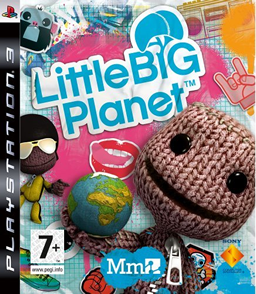
I really do enjoy Sonic the Hedgehog 2, but I somehow feel that this and the other shrugworthy games available as part of Sony’s much advertised “Welcome Back!” program are simply not enough to effectively cajole customers into once again suckling complacently from Sony’s blackened teat. As it turns out, the non-PlayStation Plus titles available under the program are all dated. For example, free Little Big Planet is nice, but I could also get the disc-based original with a case and manual for a small but passionate ass-based dance at my local GameStop. I already own and have defeated Infamous, and I’ve never even heard of Dead Nation, but I chose it as my second free game because the others were just as unappealing as the PlayStation Plus content. Oh, and apparently, the PS Plus content will only be available to users for 30 days (or until your subscription to the service ends), so you’d better get playing.

If all this wasn’t disappointing enough, I’m having problems accessing the PlayStation Store. More than once tonight, I’ve received a message that the title I’m trying to download is unavailable because the store is “undergoing maintenance.” Maybe the disturbance is due to so many people logging on at once. Oh well; at least I didn’t lose my second free game, as reported by Mark Hachman of PC Magazine.

In the interest of fairness, it’s full disclosure time: Though I at one point said that I was going to leave the PS3 alone, I - like my comrade Evan Ritchie - cannot find it in myself to stay away from the company that gave me gaming gold like the Tekken series, Metal Gear Solid and a controller that doesn’t suck for fighting games. I’m really not the guy Sony has to impress. But the gaming fate of millions of others hangs in the balance, and I’m not sure this ho-hum peace offering is enough to keep them around.

Sony, you have been warned.

Oh, and for the record: While the “attract mode” demo was playing on my new PSN copy of Sonic 2, for just a second, I felt the same twinge of excitement I used to get in fourth grade when I loaded up the game. Perhaps this Welcome Back program really has given me something worth my trouble after all.

Yeah, not really.

Tuesday, May 31, 2011

One Step Foward, Two Steps Back

I am a nostalgia hound. From wacky ‘80s flicks overflowing with big hair and bad tans to old school McDonalds commercials featuring a fantasy-oriented Ronald McDonald and the mop-like Fry Guys, I’m instantly addicted to even the slightest nod to the era spanning from the late ‘70s through about 1998. For example, if anyone had seen my reaction to Pepsi Throwback – made with REAL SUGAR, which kills you now but was okay to consume in 1986 – they would have skulked out of the store pretending to be just as disgusted with the soft drink crazed mental patient as everyone else.

Remember Re-Loaded?
Classic video games, however, trump even the most sugary of resurrected beverages on my nostalgia meter. While I should have been at work like the rest of the nation, I today found a copy of the January 1997 issue of Gamepro; it features Ultimate Mortal Kombat 3 for the Super Nintendo, what would become Castlevania: Symphony of the night (then called Castlevania X), and a bunch of crumby Sega Saturn and Nintendo 64 titles. It was a time when 32- and 64-bit systems were in their infancy and 16-bit was in its twilight, and they all existed simultaneously. Final Fantasy VII hadn’t ruined JRPGs yet and the future was uncertain – but clearly very, very bright. Delicious.

As I perused the pages for a little more than an hour, I was transported back to a time where most games held at least some promise of wonder and excitement; the potential to be great. If you’ve ever seen the cartoon Garfield and Friends, you know what I’m talking about: Anything was possible, and what started at home on a lazy Saturday could end in a strange foreign land several weeks later – all within the span of a few minutes.

"Did someone just call me?"

Today’s games don’t do that anymore. They’re much, much larger and graphically impressive, but a shooter is a shooter and if an action game isn’t super serious with a star like Krotos from the God of War series, it’s labeled as “kids’ stuff” and relegated to the bargain bin.

In some ways, little has changed. What we have today is the illusion of choice, just like 22 years ago when the king from Dragon Warrior asked the player if he or she would undertake a massive quest, but if the player answered “no,” the king responded with “But thou must!” We can change the way our avatar looks, we can customize the development of our character’s abilities and we can even download expansion packs to make our games last longer. But we’re doing all that in the same genres we’ve been playing for decades. Very few developers are willing to take chances, and if they do, they’re almost forced to release their games via PlayStation Network or Xbox Marketplace because they wouldn’t sell enough copies to the spoiled Call of Duty generation to turn a profit. Back in the NES era developers tried anything and everything, but now that games cost millions to produce, it’s more fiscally sound to go with something that’s a proven moneymaker. I can’t say I wouldn’t do the same thing, but as a consumer who’s tired of guns, Grand Theft Auto and glorifying the bloodiest eras of American history, I’m getting tired of the same four quests rebadged and repackaged over and over and over again. To be fair, gaming has long been about copycat titles – but that’s all I see now.

I spent just as long saying no here as I did customizing my Saints Row character.

You can FLY in this one.
Up until about five years ago, if you purchased a game, you knew you had the same version as everyone else. Now, “special editions” of new releases clog our game stores and confuse our buying options, and forced updates and installs prevent us from playing our new games when we come home from the store. When I was a kid, I raced home from Toys ‘R’ Us with games like Super Mario Bros. 3 and was playing within seconds of my arrival. In contrast, about four years ago when Metal Gear Solid 4 found its way to store shelves (I got the special edition because I didn’t want to “miss out”), it took about 30 minutes to install and the opening video was 45 minutes long. By the time the actual game started, I was only able to play for a little while before I had to head off to work. In the same vein, I’ve purchased downloadable content which takes so long to install that I start doing something else and lose interest. Is it too much to ask to be able to actually play a new game less than an hour after putting it in the console?

Is this the ranting of a bitter player whose gaming era has come and gone? Probably. But as someone who had devoted almost 25 years to the pastime, I can’t be the only one who feels this way. If something doesn't change, I think we're headed the same way the industry was going in 1982-83, if you catch my drift.

I’ve got a few cans of Pepsi Throwback in the ‘fridge and U2’s The Joshua Tree album cued up in my CD player. I’m going to play a few rounds of Street Fighter II to clear my head and convince myself that I’m not quite an old man just yet.

Wednesday, May 25, 2011

A Cruel Summer in the Ice Cap Zone

I don't even know what to say to this.

A song about summer mashed up with the quintessential Sega Genesis/Mega Drive winter level? I think my brains just melted out of my ears.


Didn't Ace of Base make a cover of this song? No, not Ice Cap Zone, the other song we were just -

You know what? Never mind.

Monday, May 23, 2011

User Generated Content and the Path to an Interactive Education

My father purchased our family’s second real computer, a 166 MHz Gateway PC, in April of 1996 for the tidy sum of $5000. For the price of a nice used car, I was introduced to music and typing programs, e-mail and the internet at large. Around that same time is when I stumbled across one of my favorite games, Duke Nukem 3D, which allowed users to create and trade their own content.

Over the last two decades or so, user generated content – or “mods” for short – have become an indelible part of gaming, especially for the computer gamer crowd. As the name implies, user generated content is any sort of meaningful alteration for an existing game that is generated by the players, including new levels, graphics, or items. At its most base level, what user made content means to gamers is expanding the life of a preexisting game to virtually infinite extents. Ponder for a moment that ID Software’s seminal shooter DOOM was released in 1993 and new content is still being crafted for the title 17 years later, or that 14 years after the release of Duke Nukem 3D, one can download a program to make the game run in a high resolution mode on post DOS platforms.

Old Duke vs. high def Duke.

But user made content is about more than just exploring new worlds and situations for basically as long as the player wants; it’s also a way to empower young minds and reverse engineer the learning process. Take, for example, your average math problem. Throughout high school, I was asked to “solve for” a given variable in an equation. It was then up to me to find a solution (which, incidentally, took hours upon hours to pull off, was entirely useless, and made me hate school, but that’s fodder for another post).

But what if it were the student giving the teacher a math problem? What if it were up to the learner to construct an equation using a newly-learned formula, taking into consideration what would need to be done to create the problem and how one would need to think in order to effectively answer it?

Many educators believe that best way to learn something is to teach it. From personal experience with Shakespeare’s Macbeth, Albert Camus’ The Stranger and several other not-so-near-and-dear works I taught during my tenure as an English teacher, I can attest to this axiom’s truth.

It's big for such a little planet.
 Now consider what goes into making a good level for a game like Little Big Planet 2, the sequel to the PlayStation 3 side-scrolling mega hit of 2008. To make an effective level (and “effective” here means entertaining), one must first be familiar with layouts and conventions of basic levels, then think like their target player when designing a concept. Having graduated from fan to creator with Duke Nukem 3D, I can tell you that the designer should be sick of his or her level by the time it’s done, having checked every facet of its functionality – and fun factor – countless times.

It’s not unlike how I felt after designing about 100 lessons for my English classes during my student teaching: I felt like I knew everything there was to know about the subject at hand. Just like the game designer becomes intimately familiar with the capabilities of his or her game engine and what makes a “fun” level, I now understand The Diary of Anne Frank, The Great Gatsby and Rita Hayworth and the Shawshank Redemption from the inside out – more so than if I had simply read these works. As the one teaching the class, the one creating the content, I had to live and breathe the source material.

A simple way for students to “reverse engineer” what their educator wishes them to learn is to have them construct a lesson. Teachers have been utilizing this idea for decades by having students give short presentations on a particular subject; they expect that the student will become an “expert” in about the time it takes to thaw a frozen pizza. This is an excellent start, but it’s not enough: With only one or two class periods to work with, students don’t have time to commit to memory everything they discover.

Besides, that approach is getting tired. (I know because I tried it.) Today’s tech savvy students demand something more.

The logical evolution of the concept: Our digital native students create their own content for a relevant learning program, such as a video game. I understand that few good educational games exist – and even fewer are worth playing – but I look forward to some future superstar teacher creating just such an application.

Next stop: End of the level.
Though it’s been years since I fired up Ken Silverman’s Build, Duke Nukem 3D’s level editor, I can still remember how to use it and exactly what it can do. Unfortunately, I can’t say the same of math class; I find myself embarrassedly whipping out a calculator to do simple long division. Perhaps if by the guidance of my teachers I had generated a few math games for that old 166 MHz PC, number crunching would be as natural to me as collecting a medikit or making a mad dash to the exit of a Duke3D level - and just as fondly remembered.